
Bioenergetics: The Bow And The Arch.
Updated: 14 hours ago
Making Room for Breath and Movement.
You can have a strong chest and powerful legs and still find it difficult to let your hips move freely. Try a simple observation.
Stand comfortably and soften your knees. Let your gaze rest gently on the floor a few metres in front of you. Take a couple of breaths and notice whether any movement flows through your pelvis.
This is the relationship I want you to explore: how the chest, hips and breath participate in the movement of your whole body.
Today I’m bringing you two exercises from the bioenergetic tradition:
The Bow and the Arch.

Bioenergetic analysis considers the body as an organism (cell) that responds to its environment—reaching towards what feels pleasurable and withdrawing from what feels unpleasant. Throughout life, from childhood into adulthood, we are shaped by internal and external stressors.

Our bodies adapt mechanically to external physical forces in ways we can experience clearly. We see this when we train: muscles respond to the demands placed on them and change shapes.
In bioenergetics, we also consider how the organism adapts to the pressures of lived experience. Internal experiences we cannot fully process are understood as shaping us and being held in the body, forming armour—patterns of muscular tension and restriction involving the connective tissue, or fascia.
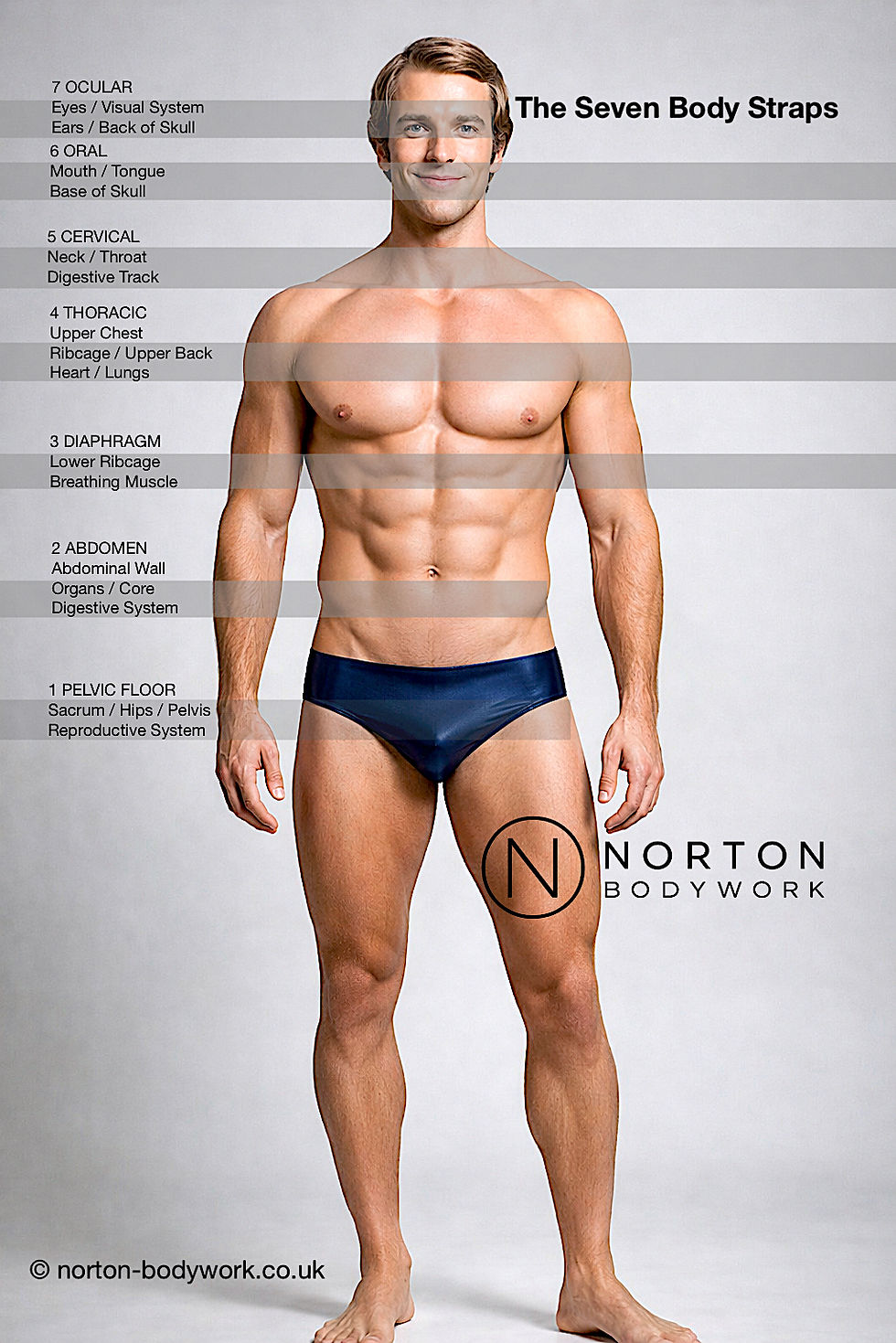
These restrictions, or blockages, may be felt around the pelvic floor, hips, diaphragm, throat, shoulders, mouth or eyes—the regions we have been exploring in my series, The Seven Body Straps.
So, what do we mean by a blockage?
In bioenergetic terms, a blockage is an area of holding that restricts the organism’s freedom to breathe, move, feel and express itself. The body continues to develop, but some of its movement becomes limited: the hips remain tightly held, the chest has less room to expand, or the throat, jaw and eyes stay tense.
The bow and the arch practise invite us to work on those restrictions through posture, breath and sensation, making room for movement through the body as a whole.
Before you begin:
Choose a clear space with secure footing.
Wear clothing that lets you move and breathe comfortably. Work within a small, manageable range.
If you have an injury, a spinal condition, recent surgery or balance difficulties, ask a physiotherapist or suitable clinician whether these movements are appropriate for you.
Stop if you experience pain, dizziness, tingling or breathlessness.
You can also stop whenever the experience feels overwhelming.
Keep your breathing gentle and continuous. Although mouth breathing is recommended for this practice, there is no need to force a deeper or faster breath.
There’s no need to make this a regular routine. Once every now and then is enough—give your body-yourself time to explore, notice and rest.
A word about vibration.
As you adjust the posture, you may notice trembling, vibrations or a sense of pulsation around your hips and legs. That is good, don't try to control it, allow it.
We are exploring the meeting point between gravity pulling on your body and your muscles working to maintain balance.
Make small adjustments to the bend in your knees.
Explore that sweet spot without forcing the position or trying to manufacture a vibration.
If trembling appears and feels manageable, notice it while continuing to breathe comfortably. If nothing happens, that is fine too.
The Arch: the forward bend.

Stand with your feet approximately hip-width apart, both feet resting firmly on the floor.
Soften your knees.
Slowly bend forwards. Allow your arms, hands, head and neck to relax. Keep your knees softened. Go only as far as feels manageable.
Do not touch the floor - Ai generate images makes errors.
Breathe gently through your mouth. As you inhale, imagine you are wearing a belt around your waist. Breathe into that area, allowing it to expand gently.
Let the breath turn into a slow exhalation without forcing or holding it.
Notice the backs of your legs, your back and your dangling arms. Notice any change in sensation. What happens to your balance as you breathe out. Any oscillatory movement upon exhalation?
Slowly return to an upright position. Slowly, slowly. Let your head come up last.
Notice your breath, shoulders, hips, feet and fingers. Take a moment to feel.
Repeat this movement three times, pausing upright between each repetition.
Rest & Integration: Lie on your back on the floor. Place a small support beneath your head if you need one. Rest your arms beside you, palms facing down. Let your legs rest comfortably.
Notice the body: trembling, shaking, warmth, coolness, or stillness.
You don’t need to make anything happen.
Just notice, breathe comfortably, and rest.
Let the posture be an opportunity to notice.
The Bow.
We will explore two versions of the bow: one with your hands supporting your lower back, and one with your arms extended overhead.
Remember, you may notice trembling, vibrations or a sense of pulsation around your hips and legs. That is good, don't try to control it, just allow it.
The bow with arms extended:

Stand with your feet approximately hip-width apart and your knees slightly bent.
Raise both arms upright above your head, with your fingers extended and spread. Allow your arms to reach slightly behind your head, within a comfortable range.
Gently lift your chest into a small backward curve. Keep the movement modest and avoid collapsing into your lower back.
Keep your head facing forwards and your eyes looking straight ahead throughout the exercise.
Take one slow, comfortable breath through your mouth down into your belly allowing the belly to expand. Imagine you are wearing a belt around your waist. Breathe into that area, allowing it to expand gently. Feels the backward extension working on your abdoment muscles, you may feel tightness in the stomach. That's ok.
Bend your knees a little more, lowering your body slightly. Explore your balance. Notice what happens around your hips and legs.
If a vibration appears, notice it without forcing it. If nothing happens, that is fine too.
Exhale slowly, letting the breath leave gently. Notice how your body responds.
Slowly return to an upright position and lower your arms. Pause and let your breathing find its own rhythm.
Notice your shoulders, hips, feet, fingers, head and neck. What sensations remain?
Repeat three times in total, pausing upright between each repetition. Afterwards, lie on your back and rest, as described above.
The bow: Lowen variation.

Stand with your feet approximately hip-width apart and your knees slightly bent.
Place your hands, or loosely closed fists, against the back of your pelvis, near the small of your back. Avoid pressing hard into your spine.
Allow a small backward curve through your trunk, gently lifting your chest. Keep the movement modest and avoid collapsing into your lower back.
Keep your head comfortably aligned, with your eyes looking ahead.
Take one slow, comfortable breath through your mouth. Allow your belly to expand. Lower a bit your body and notice what happens in the body. What happens to your balance? Keep looking ahead thorughout the exrceise. Then exhale slowly, letting the breath leave gentle.
Notice what happens around your hips, legs and knees as you exhale. Notice how your body maintains its balance.
Return slowly to an upright position and pause.
Lie on your back on the floor. Place a small support beneath your head if you need one. Rest your arms beside you, palms facing down. Let your legs rest comfortably.
Notice the body: trembling, shaking, warmth, coolness, or stillness.
You don’t need to make anything happen.
Putting the two together?
Go gentle here - If you practise all three, begin with three repetitions of the arch, followed by rest.
Continue with three repetitions of the supported bow, rest again, then explore three repetitions of the bow with arms extended.
Take your time between exercises.
Continue only while you feel comfortable and steady.
Notice how the experience changes between folding forwards and opening the front of the body. Where does your attention go? Does your breathing change? Do your hips remain available for movement?
There is no need to produce shaking, a particular emotion or a dramatic release.
Whatever you notice is enough to begin with.
Give yourself time to rest.
Spend a few quiet minutes noticing your breathing and the contact beneath your body.
Perhaps something feels easier. Perhaps your mind is calmer or more chatty. Do you feel anxious or relaxed? You may simply have become aware of how much effort you were using or may not, and that's perfectly fine.
Making room.
As you finish, notice what you carry back into the rest of your day.
How do your feet meet the floor? Can your hips move? What happens to your breath?
Is your mind more awake?
There is time to become familiar with whatever you notice.
I hope you enjoy these two practices. Yes, practices—because the intention you bring to them matters.
Approach them with curiosity, with the intention to explore and give yourself space for recovery. You may be surprised by how your body feels, how you experience gravity, or what you notice when even you'r resting on the floor noticing.
Be patient. Be playful.
Keep your curiosity about the body alive. It is a wonderful place to be, always offering something to notice.
Listen to it. Give it and yourself time and more room to move.
Stay tuned.
Sergio Alexander Norton.
LMTs Dip ITEC

Comments